Pull up three different real estate sites and search "Peregrine Colorado Springs home prices" and you'll get three different answers, sometimes six figures apart, sometimes for the same few months. That's not a data error. It's the whole story of what buying in Peregrine actually involves.
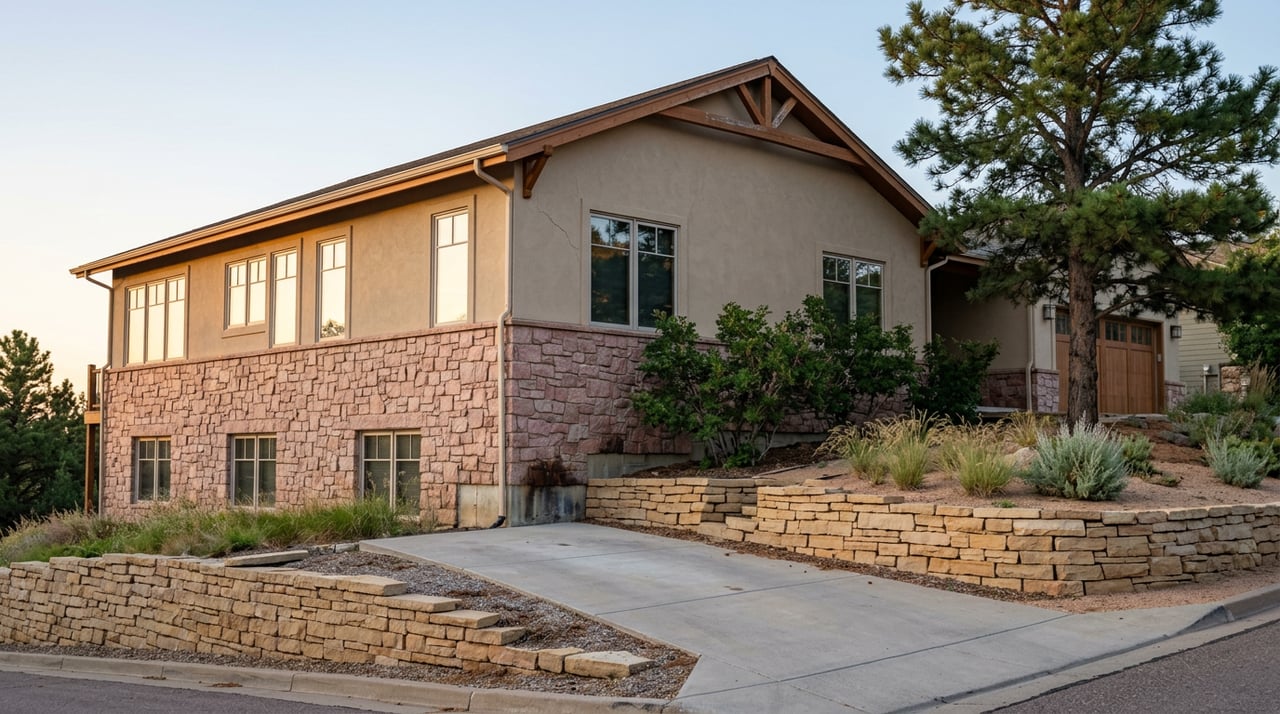
Picture two houses, both roughly 3,900 square feet, both inside the same HOA boundary, both listed the same month. One backs to open space on a steep lot with a walk-out basement carved into the hillside. The other sits on a flatter interior street two blocks away. Square footage on paper looks nearly identical. The price gap between them can run well into six figures, and neither one is the "median" home in Peregrine, because in a neighborhood this small, there isn't really such a thing.
Three Sources, Three Very Different Numbers
Here's what shows up when you actually compare recent snapshots of Peregrine pricing side by side.
Source | Time window | Reported median |
|---|---|---|
Redfin | April 2026 | $638,000 (down 4.1% year over year) |
Homes.com | Trailing 12 months, as of late July 2026 | $859,412 (down 8% from the prior 12 months) |
Homes.com | February 2026 | $925,000 |
Those aren't three competing methodologies arguing over the same stable fact. They're three different slices of a market so thin that the number underneath them barely holds still long enough to report. Redfin's own April 2026 snapshot noted that just one home sold in Peregrine that month, which means a single closing can swing the entire "median" for the neighborhood. A $700,000 sale one month and a $1.1 million sale the next don't average into a trend. They're two data points pretending to be a market.
Compare that to the wider Colorado Springs market, which is stable by comparison precisely because it's built from a much larger sample. Citywide, Redfin's figures refreshed in early August 2026 put July's average Colorado Springs house price at $465,000, down 3.1% year over year, with homes selling in about 41 days. El Paso County's broader single-family median sat at $475,000 year-to-date as of the March 2026 report from the Colorado Association of REALTORS and ShowingTime, moving only 2.1% year over year across an inventory of roughly 2,565 homes. That's what a real median looks like when there's enough volume behind it to smooth out the noise. Peregrine doesn't have that volume. It has a few dozen sales a year spread across custom homes that were never built to be interchangeable in the first place.
Why a Single Sale Can Move a Median by Six Figures
This isn't a Peregrine-only quirk. It's what happens in any small, hillside, custom-home submarket where every listing is genuinely different from the one next door. Next door in Mountain Shadows, the same pattern shows up in Redfin's recent figures: the average house price there was reported down close to 13% year over year, while the price per square foot was up around 16% over the same period. Those two numbers contradict each other on the surface. They don't contradict each other in reality. They're describing a market where the mix of what sold changed more than the value of any individual home did. A few smaller homes closing instead of a few larger ones will drag the average price down even while every buyer is paying more per square foot than they were a year earlier.
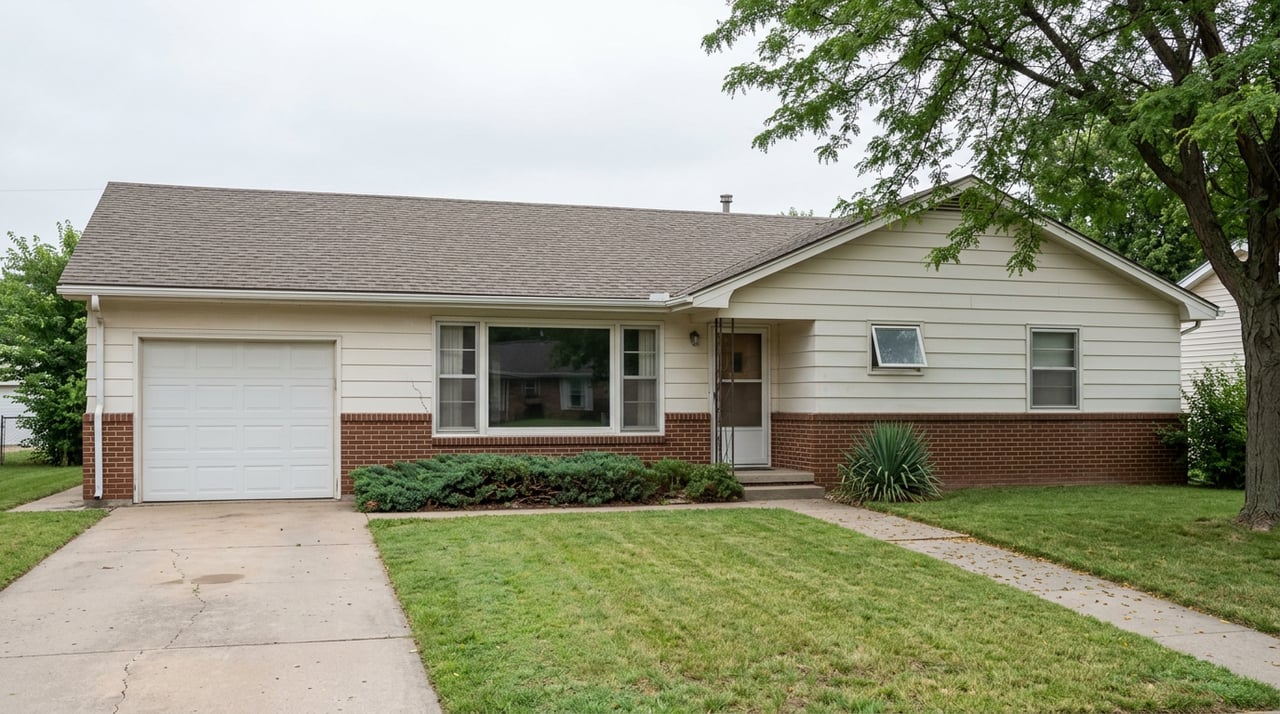
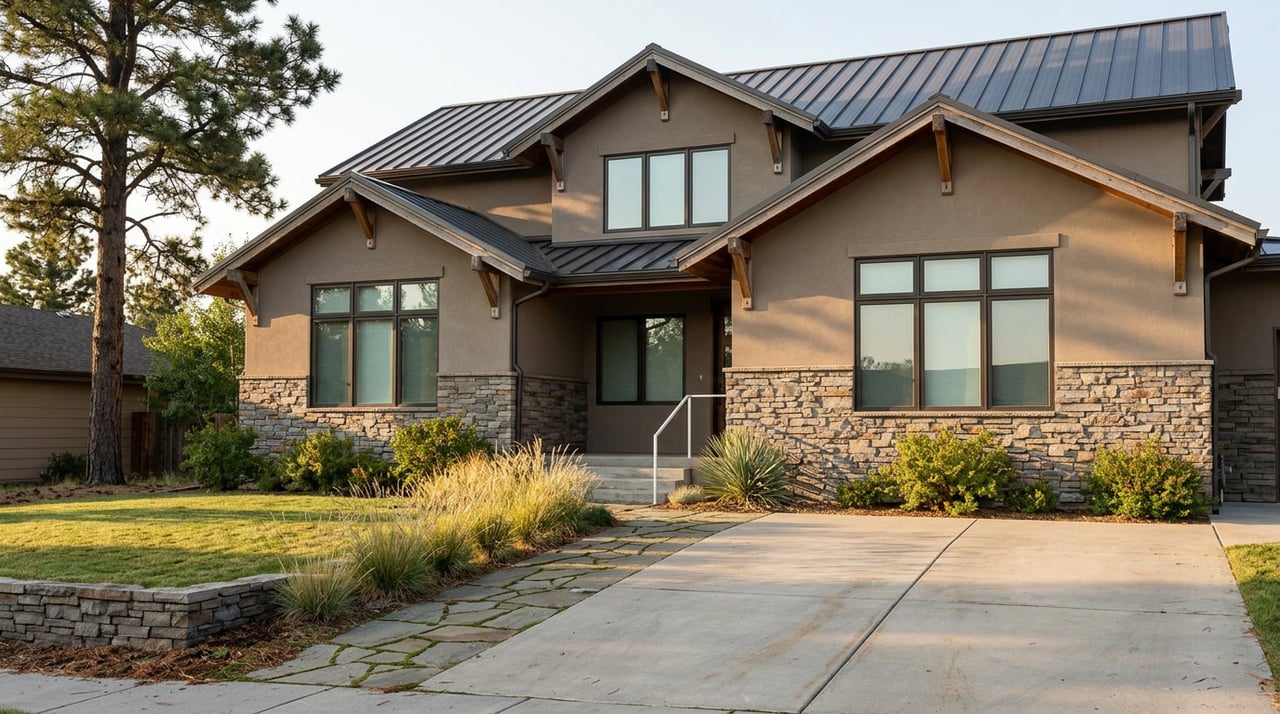
Peregrine works the same way, just more so, because Peregrine was developed over multiple phases from the late 1980s through the early 2000s by a mix of regional builders rather than one production company running a single floor plan across the whole neighborhood. There's no baseline model home to compare against. A ranch built in 1988 on a flat interior lot and a two-story custom build from 2001 perched on a slope with a Front Range view aren't variations on the same product. They're different products that happen to share a mailing zip code.
What Actually Sets Price in Peregrine
If the neighborhood-wide median isn't the useful number, what is? Four things do more to explain what a specific Peregrine home is worth than any trailing-12-month average:
- Build era and builder. Homes from the earlier development phases tend to run smaller and simpler. Later-phase homes, especially those built closer to 2000, tend to carry more custom finish work and larger footprints. Knowing which phase a street belongs to tells you more than the square footage line on the listing sheet.
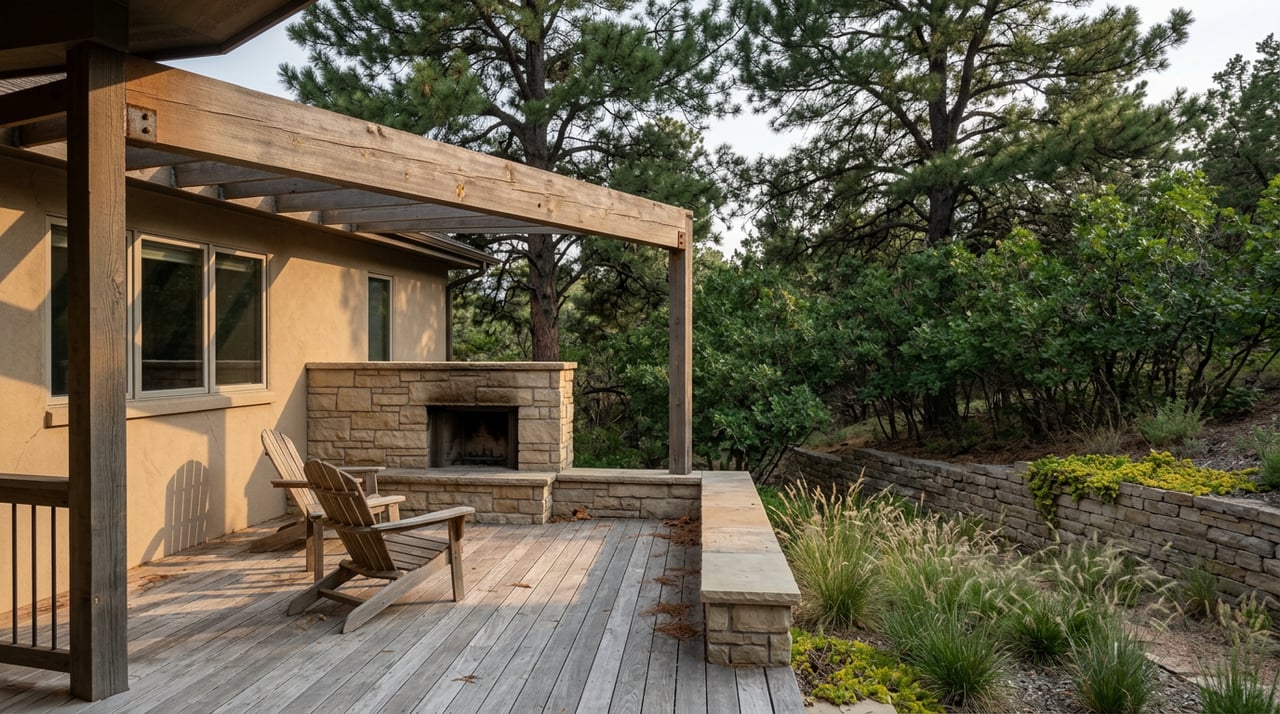
- Slope and lot position. A walk-out basement carved into a hillside adds usable square footage but also adds retaining walls, drainage considerations, and driveway grade to think through at inspection. A flatter interior lot skips those costs but usually skips the view too.
- Elevation and view corridor. Homes higher up the hillside, closer to the open space boundary, tend to carry a real premium tied to unobstructed views toward the city and the Front Range. That premium has nothing to do with square footage and everything to do with where the lot sits on the slope.
- Which HOA sub-association the address falls under. This one rarely shows up on a portal listing page at all, and it matters more than most buyers expect.
The HOA Layer That Doesn't Show Up in the Median
Peregrine isn't governed by a single flat HOA structure. The Peregrine Master Association covers the overall community, but Alpine Glen, The Village, The Sanctuary, and La Bellezza all operate as their own sub-associations layered on top of it, each with its own fee structure and level of service. The master association's 2026 trash and recycling contract with Republic Services runs $206 per home for the year, which is a fixed, current, and fairly modest number. But that's just the base layer.
The Village at Peregrine, one of the sub-associations, covers 49 custom ranch-style homes built in 1997, ranging from 3,200 to 4,000 square feet, where dues fund lawn maintenance, irrigation, tree spraying, and snow removal on top of whatever the master association charges. That's a meaningfully different cost and service picture than a flat monthly assessment on a street with no sub-association at all. Two homes with identical square footage in different filings can carry different total HOA obligations, different architectural review processes for something as simple as a new roof color, and different answers to how snow removal actually works in January.
None of that shows up in a median price pulled from a portal. All of it shows up in the closing disclosure.
How This Plays Out Next Door
Buyers comparing Peregrine against neighboring Rockrimmon or Mountain Shadows run into a version of the same lesson. Rockrimmon developed mostly through the 1970s and 1980s, with easier access to retail and a patchwork of smaller, separate HOAs rather than one master structure, some original streets carrying no HOA presence at all, and pricing that generally runs from around $400,000 to $750,000 depending on size, lot, and view. Mountain Shadows sits along the foothills on the west side of the city, close enough to Garden of the Gods that some homes look directly at the red rock formations, and like much of Peregrine, it sits within or adjacent to the wildland urban interface, which brings its own defensible space and fire mitigation questions into a purchase. Peregrine sits in between geographically, custom-built like Mountain Shadows but organized under its own master association rather than a scatter of independent filings.
The lesson holds across all three: in this stretch of northwest Colorado Springs, the neighborhood name on the listing tells you less than the filing, the phase, and the slope. Comparing a flat median across neighborhoods this varied is a bit like comparing average shoe size across a room and expecting it to tell you who fits which pair.
A Few Questions Worth Asking Before You Compare Numbers
Is Peregrine currently a buyer's market or a seller's market? Redfin's April 2026 snapshot showed Peregrine homes selling roughly 1.4% under list price with a median of 42 days on market, and a separate Homes.com figure put average time on market closer to 70 days against a national average of 58. Both point the same direction: more room to negotiate and more time to evaluate than the frenzy years of 2021 and 2022, though with a sample this small, any single closing can shift those figures again within a month.
Does a lower list price always mean a better deal? Not on its own. A lower price per square foot on a flatter interior lot might reflect a genuinely lower-cost home, or it might reflect a lot with no view premium and a longer commute to the trailhead. Slope, phase, and HOA filing explain more of the price gap than square footage alone.
What should an inspection focus on here that it might not elsewhere? Drainage, retaining walls, and driveway grade matter more on Peregrine's sloped lots than they would on a flat subdivision street. Homes backing to open space near Blodgett Peak also carry wildfire mitigation and defensible space considerations worth discussing early, not after an offer is already in.
Peregrine rewards buyers who look at the specific street and the specific slope, not the neighborhood-wide number. If you're trying to figure out what a particular Peregrine address is actually worth, or whether a listing's price reflects its phase, its filing, and its lot the way it should, Kevin James Bond has spent years walking these hillside streets with buyers who wanted the real answer instead of the portal average. Let's Connect and look at the specific home, not just the number attached to the neighborhood.