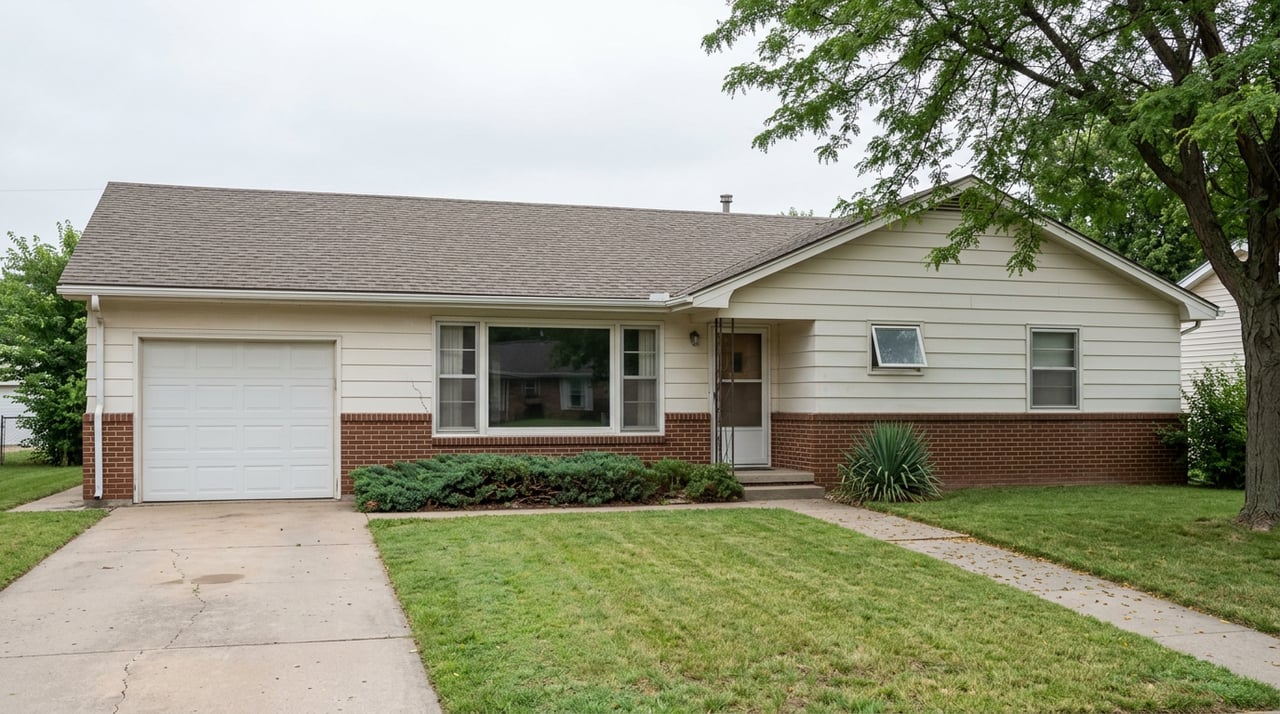
Why might a well-priced house in Garden Ranch take two months to go under contract while a similar one down the street goes under contract in three weeks? Home condition may be one factor in the time before an offer, while inspection negotiations happen after an offer is accepted.
Garden Ranch is one of the few Colorado Springs neighborhoods where nearly every home was built inside a fifteen-year window, the 1960s through the early 1970s, and the neighborhood has never had a mandatory HOA to standardize what happens after that. No architectural review committee ever required anyone to replace a panel, repipe a bathroom, or scope a sewer line. That freedom is part of what people like about living near Palmer Park and the Ranch Community Garden. It is also why two houses that look nearly identical from the street can close weeks apart, and why the neighborhood's short- and long-term sales snapshots differ.
Two Market Snapshots Tell Different Stories
Pull two different snapshots of the Garden Ranch market and you get two different stories.
Measurement window | Median price | Days on market | Year-over-year change |
|---|---|---|---|
Trailing 3 months (through May 2026) | $423,000 | 51 days | Price down 8.5%, up from 42 days a year earlier |
Trailing 12 months | roughly $455,000 | 79 to 81 days | Price up 1 to 3% |
For comparison, Colorado Springs overall sold in 43 days on average over the same three-month window ending in May 2026, with a citywide median of $450,000, down 3.3% year over year.
That is not a data error. It is the neighborhood telling you something real. A trailing-twelve-month average blends fast, well-prepared sales with slow, complicated ones, and in a neighborhood with this much variation in home condition, the slow ones pull the average up hard. Garden Ranch's short-term number already runs above the citywide pace. Its long-term number is substantially higher than the short-term figure. The figures describe different market windows; they do not, by themselves, show how long post-offer inspection negotiations take.
Inspection Negotiations Happen After an Offer
Here is the part most buyers don't expect. In a typical Colorado Springs contract, the inspection period has its own set of deadlines built right into the Dates and Deadlines table: an inspection objection deadline, a resolution deadline, and a termination deadline. Once a house is under contract, inspection findings may need to be negotiated before those deadlines pass. In a neighborhood where most homes were built before 1974, those conversations can be a routine part of the process.
Colorado's radon disclosure law adds another layer to that clock. Since August 7, 2023, Colorado law has required every residential sales contract to include a bold-faced warning statement, along with any radon test results or mitigation records the seller has on file. The state health department has found elevated radon in roughly one out of every two Colorado homes tested, and the law's own required language states plainly that Colorado "strongly recommends that all home buyers have an indoor radon test performed." The law doesn't require the seller to test. It just requires them to be honest about what they know,
Five Issues an Inspector May Find in a House This Age
These issues are not unique to one unlucky house; they can come up in homes built in this era.
- Federal Pacific or Zinsco electrical panels. These brands were common in Colorado Springs homes wired in the 1960s and 70s, and inspectors treat heat or arcing at the panel as a routine finding in houses from this vintage. A straightforward 200-amp panel replacement in Colorado Springs typically runs $1,500 to $3,000.
- Aluminum branch wiring. If a Garden Ranch home was built between 1965 and 1973, there's a real chance it has aluminum wiring rather than copper, a byproduct of copper prices spiking during those exact years. The wire itself isn't the danger. Loose connections at outlets and switches are.
- Galvanized supply pipe. Older Colorado Springs neighborhoods are the most common source of whole-home repipe jobs, and galvanized steel corrodes from the inside, often without warning.
- Aging sewer lines. Clay and cast-iron sewer lines from this era are vulnerable to root intrusion at the pipe joints. A sewer scope costs around $250 in most of Colorado and is the inspection step buyers skip most often, usually to their regret.
- Radon. Given how common elevated readings are statewide, a Garden Ranch inspection period without a radon test is the exception, not the rule. Testing runs $125 to $175, and most agents treat a reading at or above 4.0 picocuries per liter as the trigger for a mitigation request.
Add a fourth-point insurance inspection into the mix, which many carriers request on homes over 30 years old covering roof, plumbing, electrical, and HVAC, and it becomes clear why the inspection period in this neighborhood does real work rather than serving as a formality.
Maintenance Variation in a No-HOA Neighborhood
Because there's no association setting a maintenance baseline, some Garden Ranch homes have already had every one of those five items addressed. Recent listings in the neighborhood have advertised a furnace and AC installed in 2023, an electrical panel replaced back in 2010, and a new roof and AC unit paired with a 2018 furnace and a 2020 water heater. Those houses tend to move through inspection fast because there's little left to negotiate.
Other houses on the same street are still running original systems from the year they were built. Both types show up in the same median price and the same average days on market, which is exactly why the aggregate numbers blur together into something that looks confusing until you separate them by condition instead of by address.
What This Means If You're Selling
To reduce the risk of post-offer inspection delays, consider addressing surprises before a buyer ever sees them. A pre-listing inspection costs roughly the same as a buyer's inspection, and it lets you decide what to fix, what to disclose, and what to price around, on your own schedule instead of during an objection window with a buyer on the other end of the negotiation. If your panel, wiring, or supply pipe is original, budgeting for that conversation now can make it easier to navigate if it comes up after an offer.
What This Means If You're Buying
A longer-than-average days on market figure in this neighborhood isn't automatically a red flag about the house. It can reflect many factors, and by itself it doesn't show how long post-offer inspection negotiations take. Order the sewer scope. Order the radon test. Ask directly whether the panel has been touched since the 1970s. None of these are deal breakers on their own, and treating them as routine due diligence rather than dealbreakers is usually the right posture for a house of this age.
A Few Questions Worth Asking Before You Write an Offer
Does every Garden Ranch home have a Federal Pacific panel or aluminum wiring? No. Plenty of homes here have already been rewired or repaneled. But given the build era, it's common enough that asking about panel and wiring history before you write an offer is a reasonable first question, not an unusual one.
Is radon testing legally required in Colorado? No. Sellers must disclose what they know and provide the required warning language, but the law does not require them to test.
Since there's no HOA, is there any standard for how well a home has been maintained? No formal one. That's precisely why two homes on the same block can present so differently at inspection, and why asking for specific maintenance and replacement dates matters more here than in a neighborhood with uniform HOA-enforced upkeep.
Should I skip the sewer scope on an older home to save money? Given how common root intrusion is in clay and cast-iron lines from this era, and how much cheaper a $250 scope is than a $5,000 to $25,000 repair, skipping it rarely saves money in the long run.
If you're weighing a purchase or a sale in Garden Ranch and want a straight read on what a specific house's systems and inspection history actually mean for your timeline, Kevin James Bond has walked enough of these transactions to tell you what's routine and what's worth pushing back on. Let's Connect and talk through your specific address before you write or accept an offer.
This article is general information, not legal, tax or financial advice. Consult a qualified professional about your situation.